

Botanical Specimens for the Yambaru World Heritage Center
To understand the forests of Yambaru, we must also learn to recognize the plants that grow within them.
These include not only native species, but also introduced plants that have spread through human activity.
One starting point for understanding the ecological impacts of invasive plants is learning what they look like.
For the Yambaru World Heritage Center, Mille Plateaux produced preserved botanical specimens of three introduced plant species for an exhibition supporting public awareness of invasive plant management.
The task was to retain the observable characteristics of their leaves, stems and flowers, allowing visitors to study their forms and better recognize them in the field.
It was an opportunity to use botanical preservation not as decoration, but as a means of understanding plants.
Creating Specimens for Observation
The project focused on three species: Mikania micrantha (ツルヒヨドリ), Sphagneticola trilobata (アメリカハマグルマ), and Alternanthera philoxeroides (ナガエツルノゲイトウ).
Each has a distinct growth habit and botanical structure.
Mikania micrantha is a climbing vine that can spread over surrounding vegetation and produces clusters of small white flower heads.
Sphagneticola trilobata spreads along the ground and produces yellow flower heads.
Alternanthera philoxeroides grows in wet environments and can regenerate from fragments of its stems.
The purpose of the exhibition was to help visitors observe the identifying features of these plants and recognize them outdoors.
Simply retaining their general appearance was not enough.
The arrangement of leaves. The growth of stems. The structure of flowers.
These details needed to remain visible and accessible to observation.
Different Plants, Different Methods
The project combined different preservation methods according to the plant structures being represented.
For Mikania micrantha and Sphagneticola trilobata, the leaves and stems underwent preservation treatment, while the flowers were embedded in transparent resin.
The aim was to retain the characteristic shapes and textures of the foliage and stems while making the small floral structures available for observation from different angles.
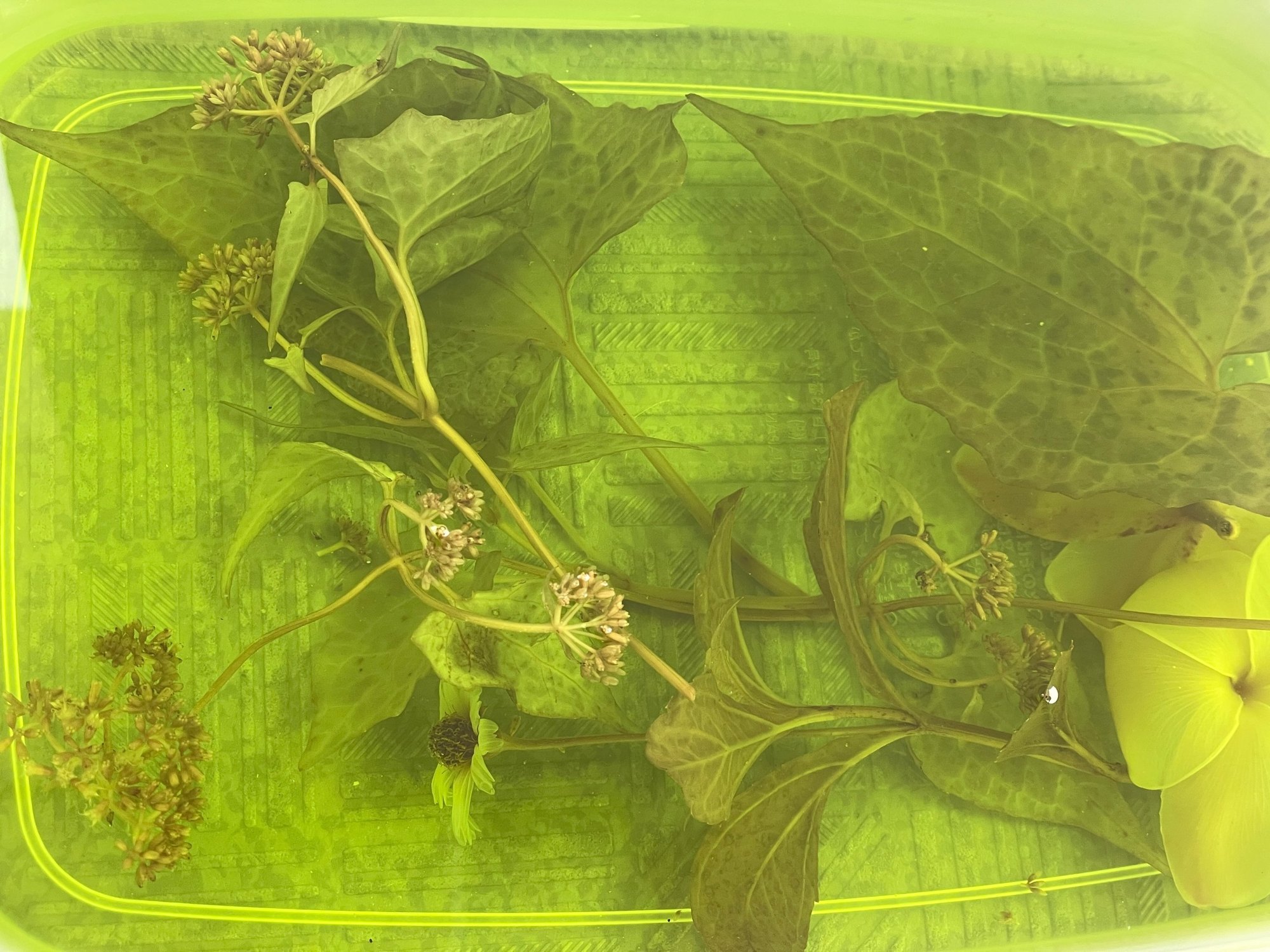
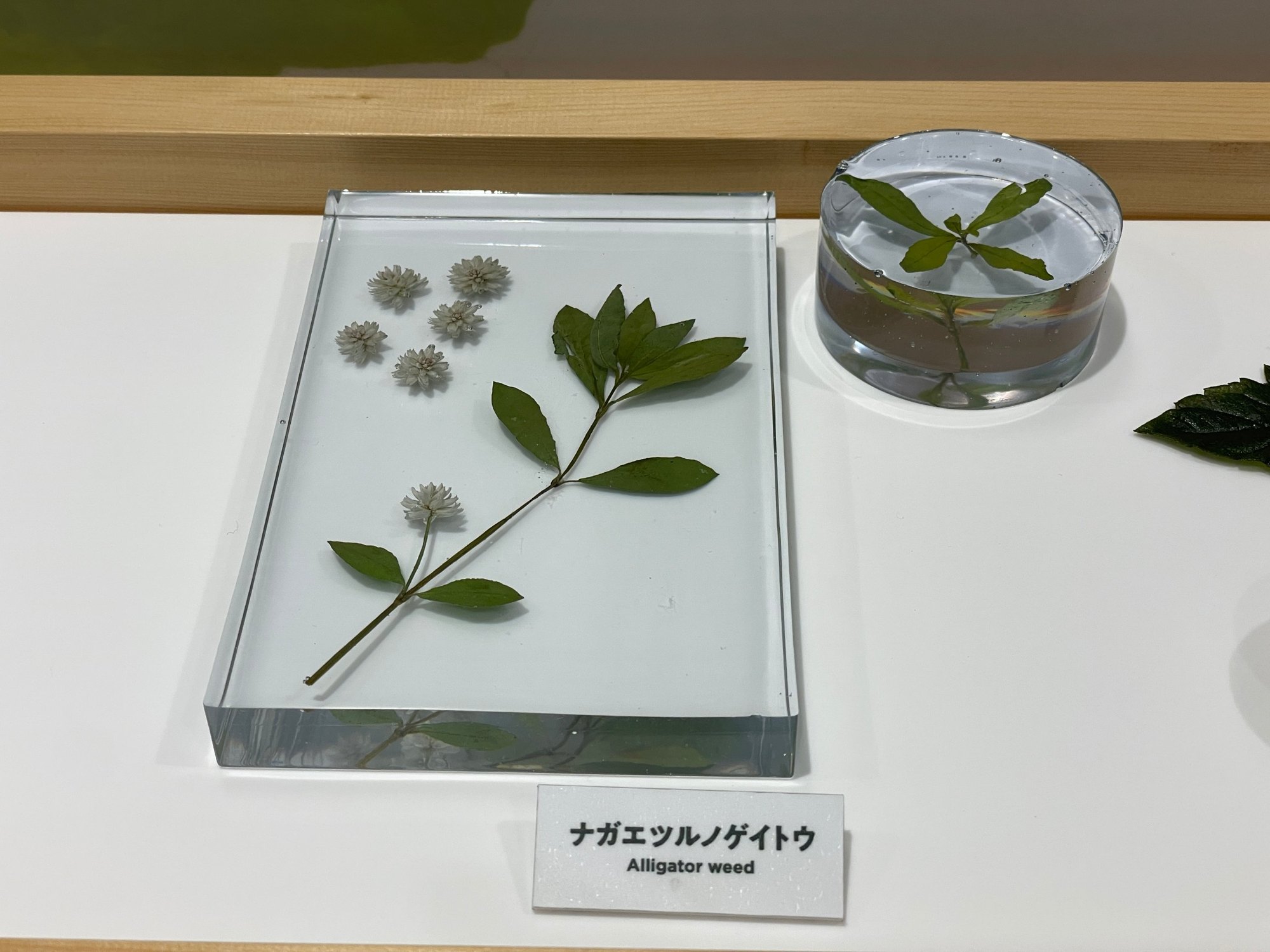
For Alternanthera philoxeroides, the leaves, stem and flowers were embedded together in transparent resin.
This approach allowed the specimen to show the arrangement of leaves and the structure of the stem as part of a single botanical form.
Choosing between techniques was not simply a matter of processing.
It began with a more fundamental question:
What should this specimen help people see?
The answer shaped how each plant was prepared and preserved.
From the Field to the Exhibition
The work began with field collection.
Collection sites were selected by Ministry of the Environment personnel, and specimens were gathered in their presence, with attention to individuals that clearly displayed the species’ characteristic forms.
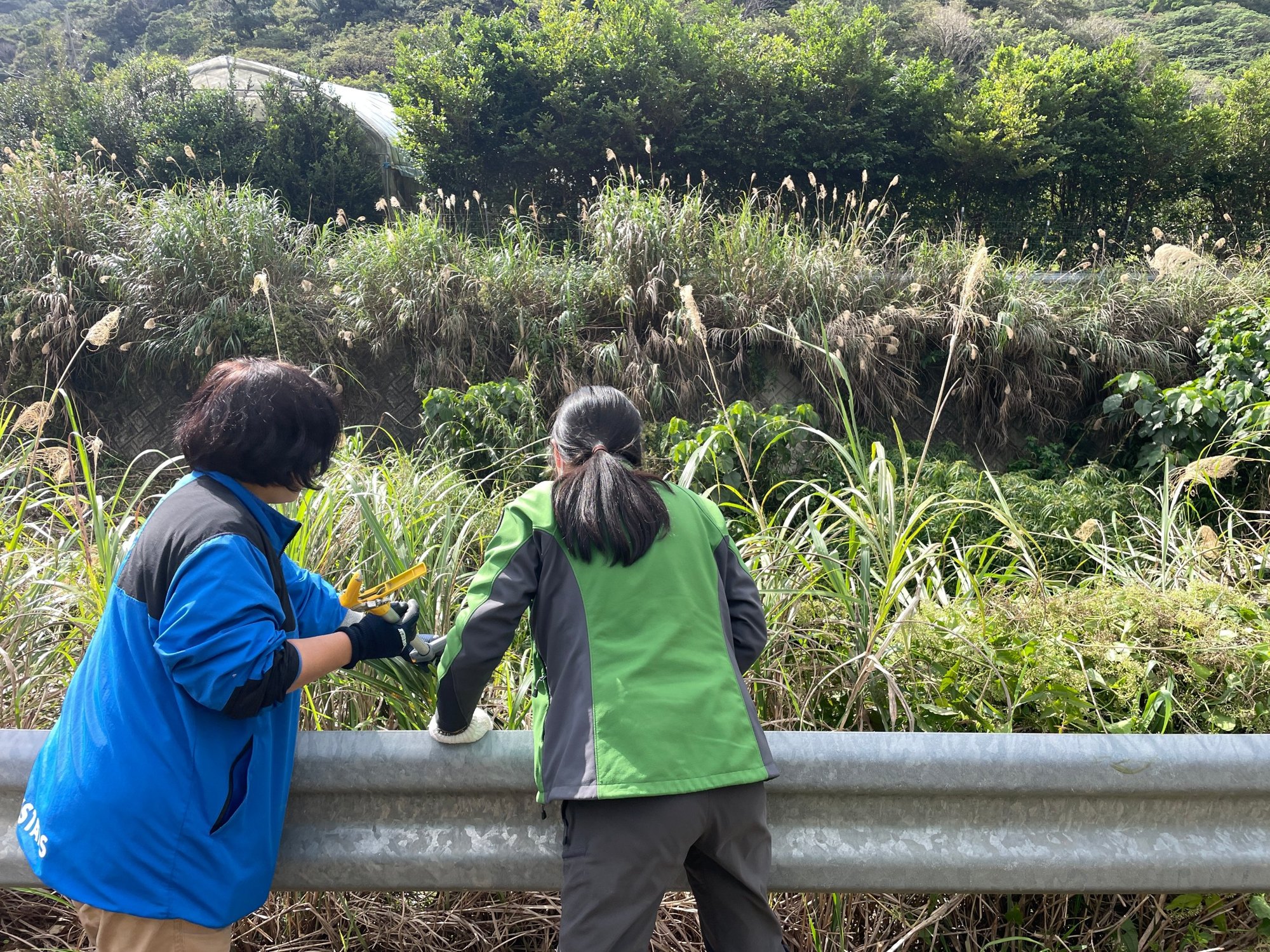
For species regulated under Japan’s invasive alien species legislation, the required permits were obtained and precautions were taken to prevent the dispersal of plant material during handling and transport.
After collection, soil and other attached material were removed, and suitable leaves, stems and flowers were selected for display.
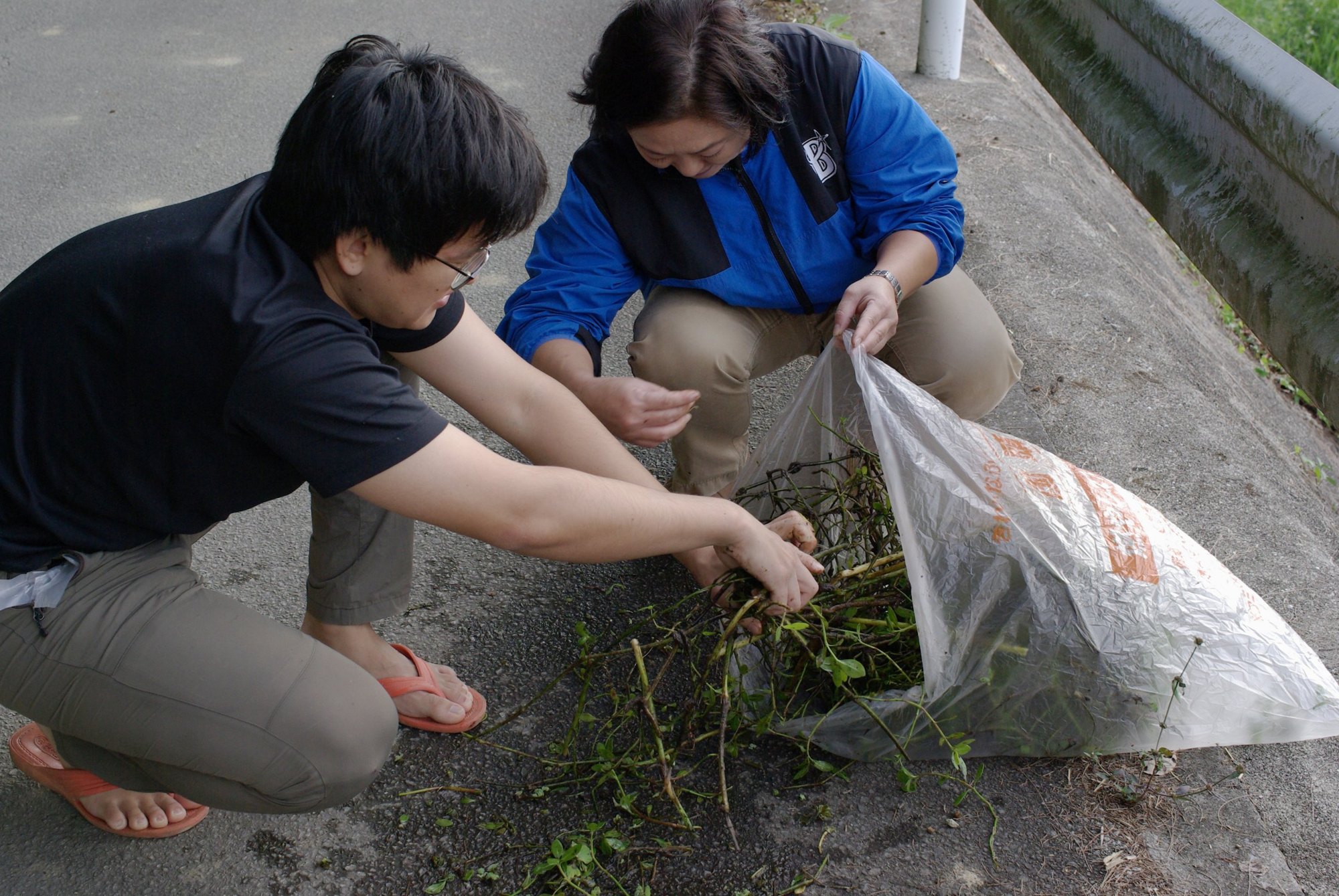
The specimens then underwent preparation, preservation, drying, shaping and resin embedding, as appropriate to each form.
Working with real plants means working with natural variation.
Each specimen required observation and careful handling to achieve a form suited to the exhibition’s educational purpose.
Through this process, the collected plants became physical specimens for close study.
Beauty and Ecological Understanding
Introduced plants have their own distinctive forms and visual qualities.
Recognizing those qualities does not mean overlooking their ecological impacts.
We believe that close observation can be a starting point for deeper understanding.
To recognize a leaf.
To examine a flower.
To notice a plant growing in the field.
And from there, to begin asking where it grows, how it spreads and how it relates to the surrounding ecosystem.
Preserving a botanical form is not the same as conserving a living ecosystem.
But preservation can make the features of a plant available for closer study.
For Mille Plateaux, this project demonstrated one way botanical preservation can contribute to environmental education and public awareness.
Seeing plants is one way of beginning to understand nature.
Creating that opportunity through real botanical specimens was the purpose of this work.
Project Information
- Project
- Invasive Plant Specimens for the Yambaru World Heritage Center
- Commissioning Body
- Ministry of the Environment, Japan
- Location
- Kunigami, Okinawa, Japan
- Scope
- Production of preserved botanical specimens of three introduced plant species
- Species
- Mikania micrantha, Sphagneticola trilobata, Alternanthera philoxeroides
- Techniques
- Botanical preservation and transparent resin embedding
- Production
- Mille Plateaux
- Delivery
- 2026
- Related Work
- Bringing the Forest into Focus — Botanical Preservation for a Forest Diorama
